

Happy Black History Month: Celebrating 10 Black Psychedelic Pioneers
Happy Black History Month!
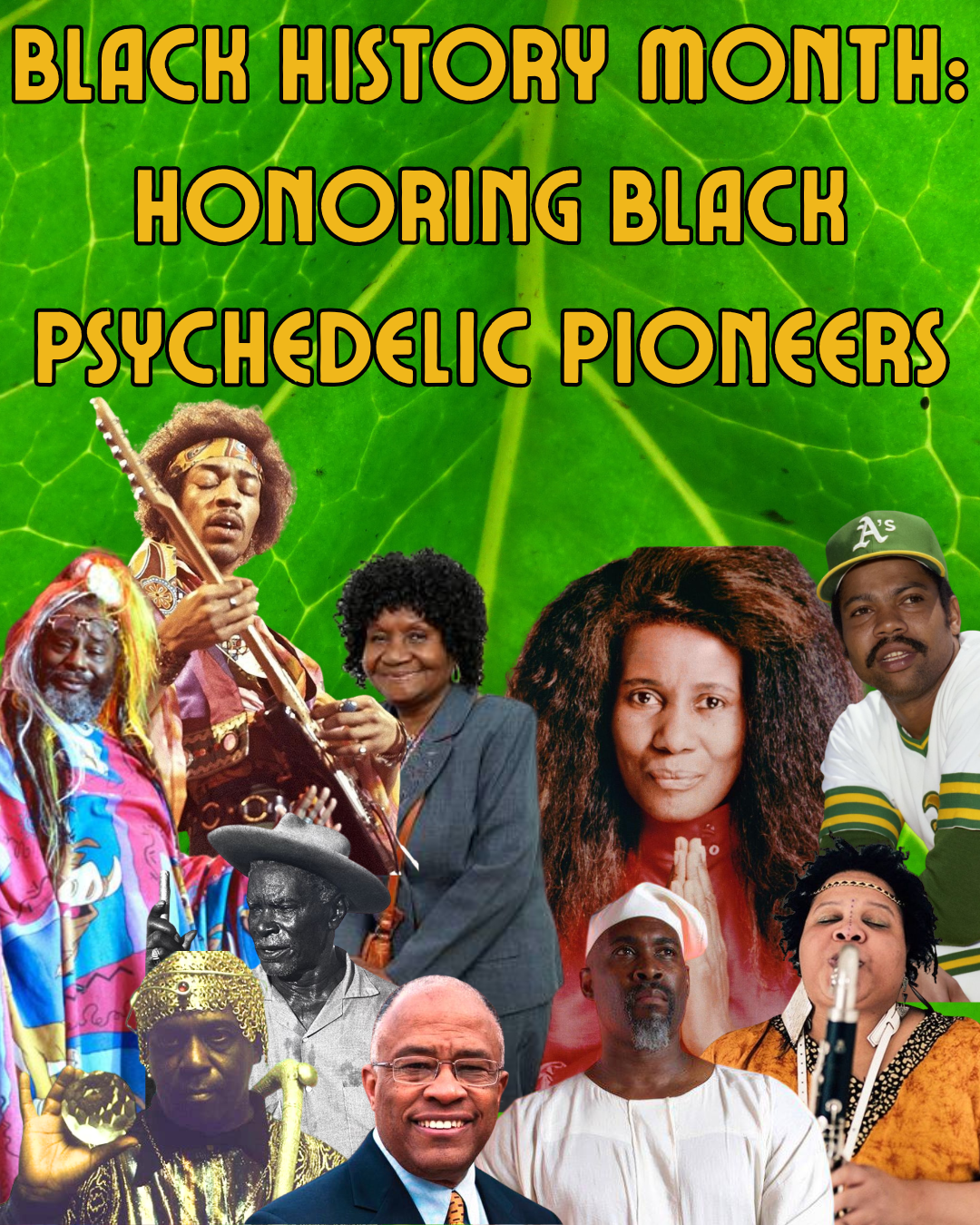
The People of Color Psychedelic Collective introduces 10 Black pioneers in psychedelic culture who created opportunities for institutions like ours. These leaders inspired the community through music, activism, spirituality, sports, and politics. Let’s get to know their values!
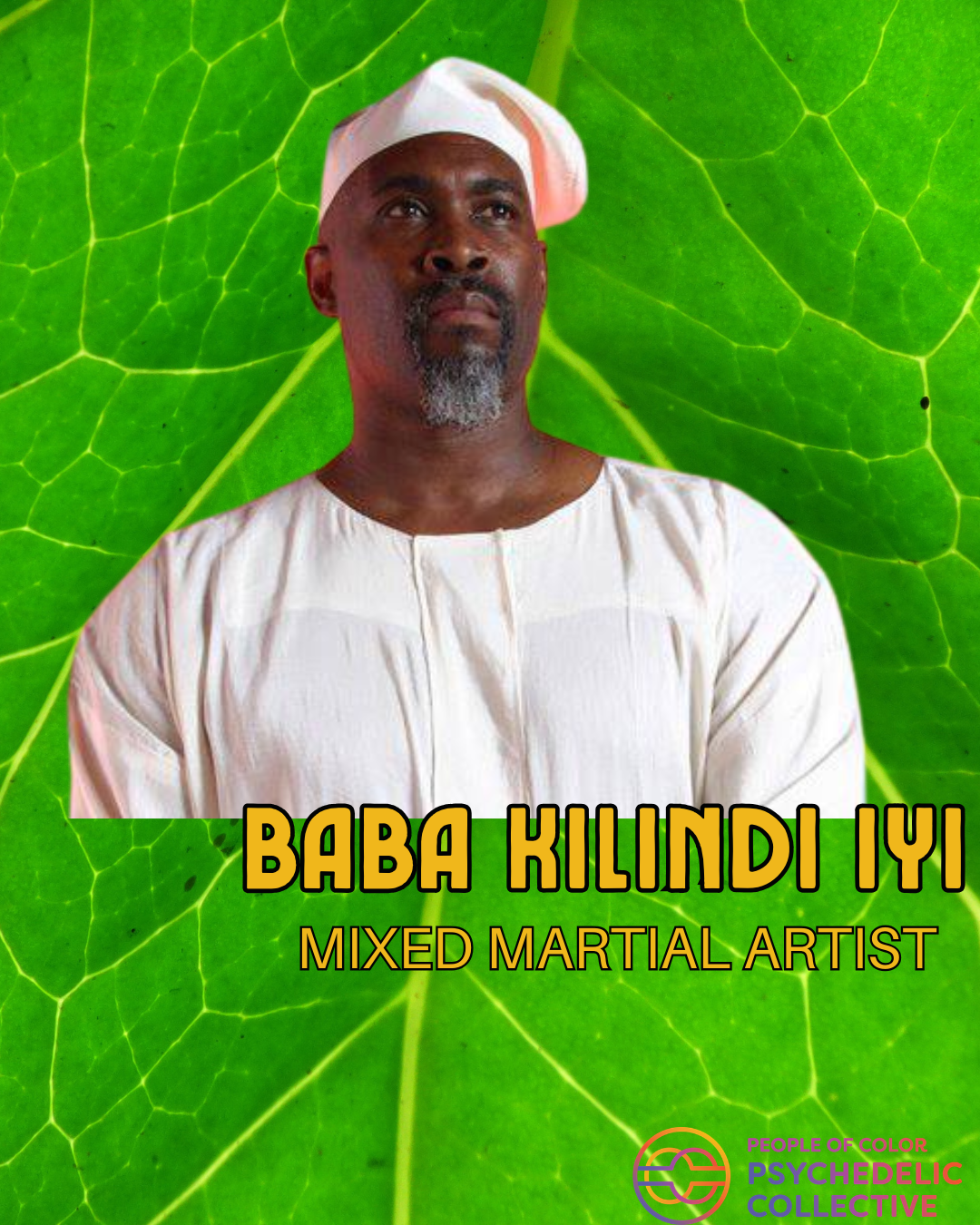
Kilindi Iyi
Kilindi Iyi was born in 1955. He is known for his high-dose mushroom journeys and for his expertise as an African mixed martial artist. Kilindi built a community of followers and students in Detroit and throughout the Midwest. Kilindi spoke to audiences around the world about the healing powers of psilocybin mushrooms at various conferences and events. He was a student of Baba Ishangi of the Ishangi Family Dancers. “When I was first getting into psychedelics,” recalls Ifetayo Harvey. “Kilindi was the only Black person I saw online talking about mushrooms and connecting them to African culture”. He was a teacher who inspired many to heal with mushrooms. Iyi passed away in 2020, and the psychedelic community has missed him dearly. Make it stand out
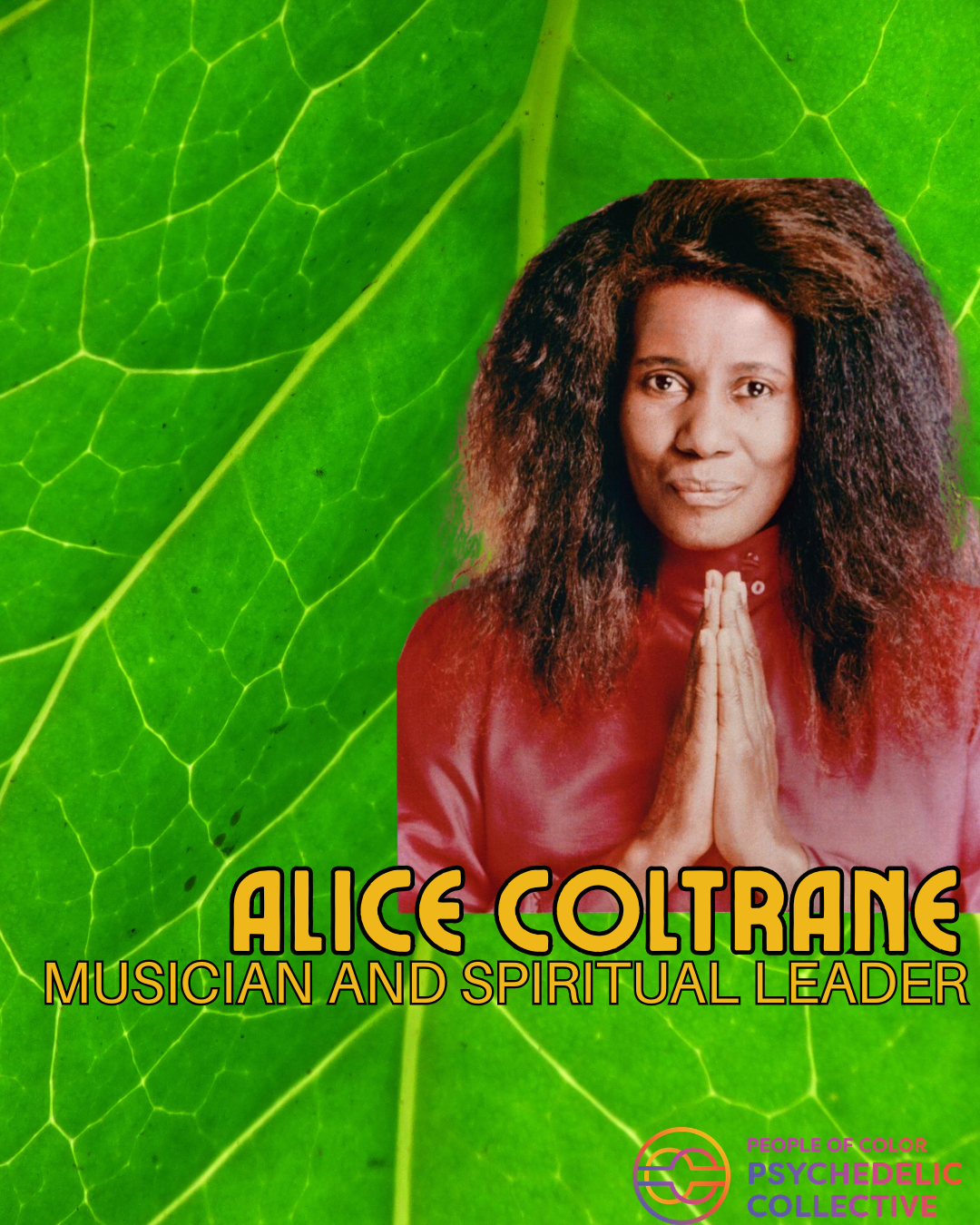
Alice Coltrane
Alice Coltrane was born in Detroit, Michigan, in 1937. Ms. Coltrane was a band leader, an accomplished harpist, and a pioneer of “spiritual jazz” whose music was mind-expanding, and the partner of saxophonist John Coltrane; the couple used each other's artistry as inspiration and left a legacy of visionary Black music. While there are reports and rumors regarding John Coltrane’s experimentation with LSD later in his life, no similar anecdotes support the idea that Alice ever used psychedelics. From 1975 until her death in 2007, she was known as Swamini Turiyasangitananda. Her deep embrace of Eastern spirituality and devotional practices, intended to liberate the mind from delusions, made her music and artistry inspirational for psychedelic enthusiasts. Alice Coltrane passed away in 2007 from a respiratory infection. She left behind a legacy that inspired many of today’s most popular musicians, like Radiohead and Doja Cat.
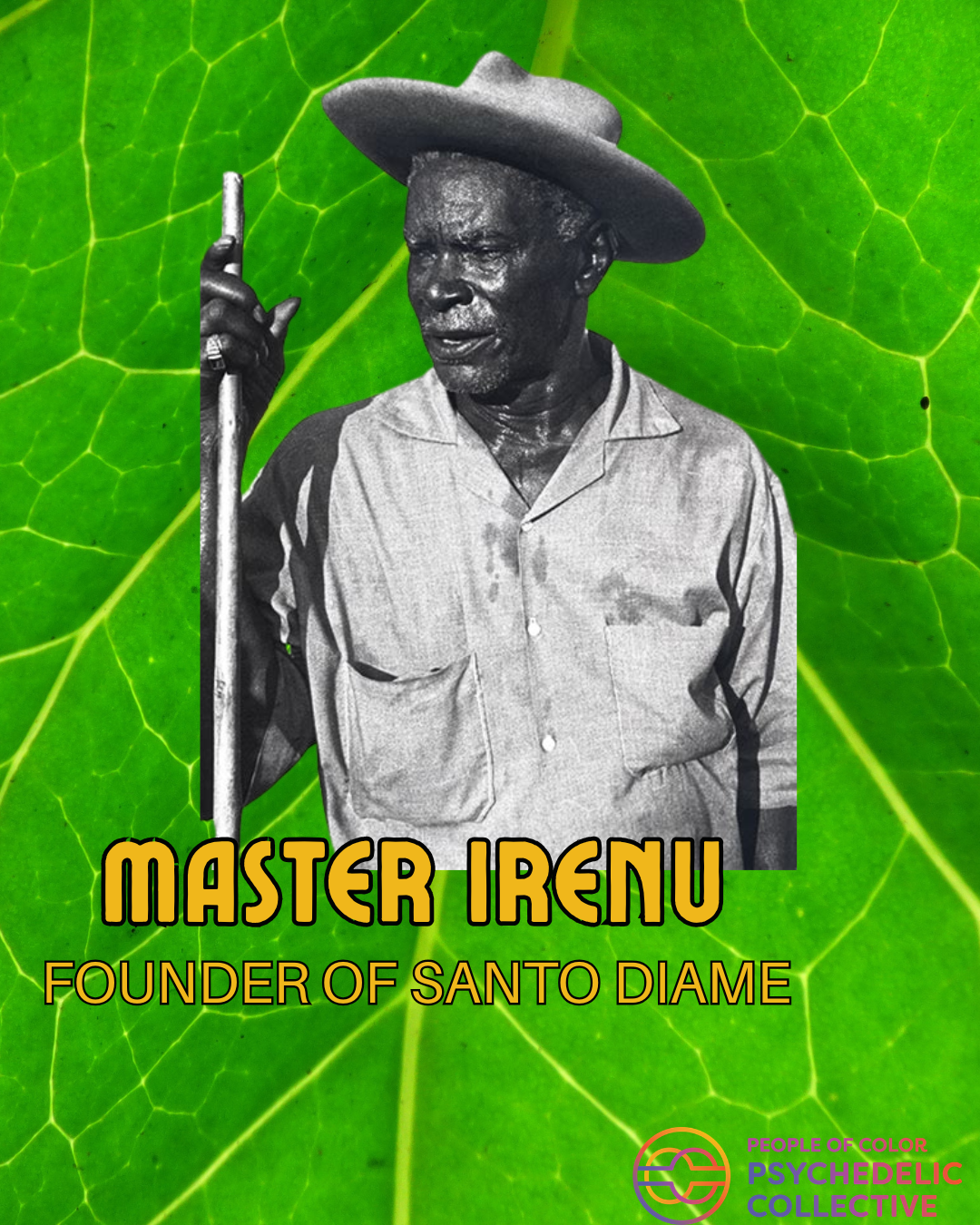
Mestre Irineu (Master Irenu)
Mestre Irineu was born in the Brazilian state of Maranhão in 1892. Slavery was abolished in Brazil in 1888, so Irineu was born to recently freed, formerly enslaved people. He moved to the state of Acre, in the heart of the Amazon rainforest, to work in rubber extraction, served in the military, and eventually landed a job as a surveyor for the Brazilian federal government. In the Amazon, Mestre Irineu connected with Indigenous communities and learned about the spiritual benefits of ayahuasca. By 1930, he founded Santo Daime, a religion that connects ayahuasca, spiritual guardians, and self-awareness. Mestre Irineu and his peers suffered persecution because most practitioners of his teachings were Afro-Brazilians. Santo Daime rituals include not only partaking of ayahuasca medicine, but chanting songs honoring Christian, Indigenous, and Afro-Brazilian gods, and connecting with each other during the ceremony. Today, the legacy of Mestre Irineu has been widely celebrated by communities that use ayahuasca for healing, inner-connection, and spiritual awakening. He passed away in 1971.
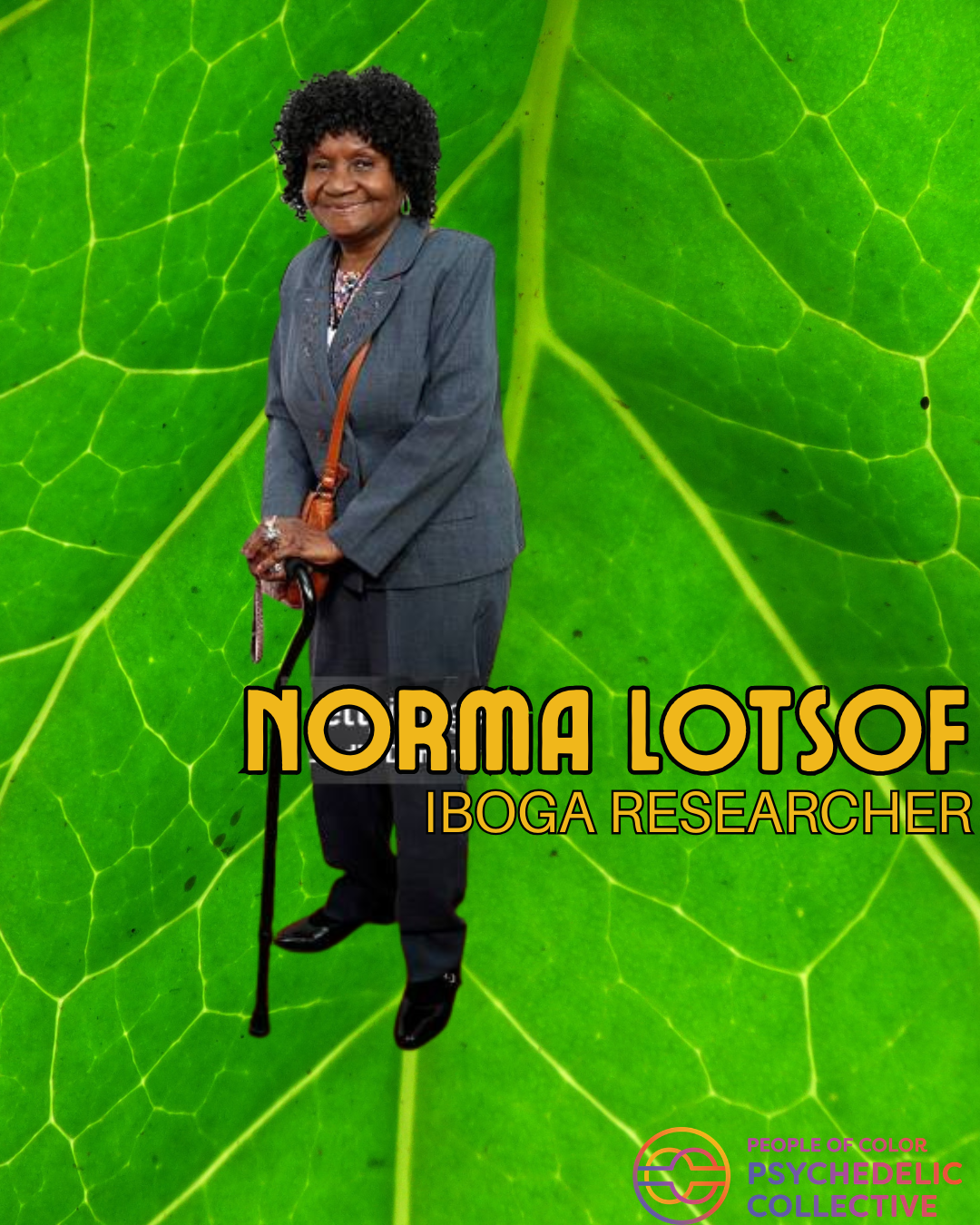
Norma Lotsof
Norma Lotsof was born in the Bronx in 1937 and is a pioneer in studies of ibogaine treatment for opioid addiction and PTSD. Ibogaine is the psychedelic substance from Tabernanthe iboga, a shrub endemic to Gabon, West Africa. Norma lives in New York City and continues to advocate for the use of ibogaine as psychedelic medicine, and to honor the Bwiti spirit culture of the Mitsogo and Fang peoples of Gabon and Cameroon, who originally learned the use of iboga from Babongo Pygmies. Norma has been working on ibogaine extraction, patents, and clinical trials since 1980, along with her late husband Howard Lotsof, who accidentally discovered that ibogaine had cured his heroin and nicotine addictions. Of Night and Light: The Story of Iboga and Ibogaine is a documentary exploring Lotsof's work to promote and protect iboga. Norma spoke at the MAPS 2023 conference after the documentary screening. There is an ongoing fundraiser to support 89-year-old Normal Lotsof with housing, medical, and research costs - donate here.
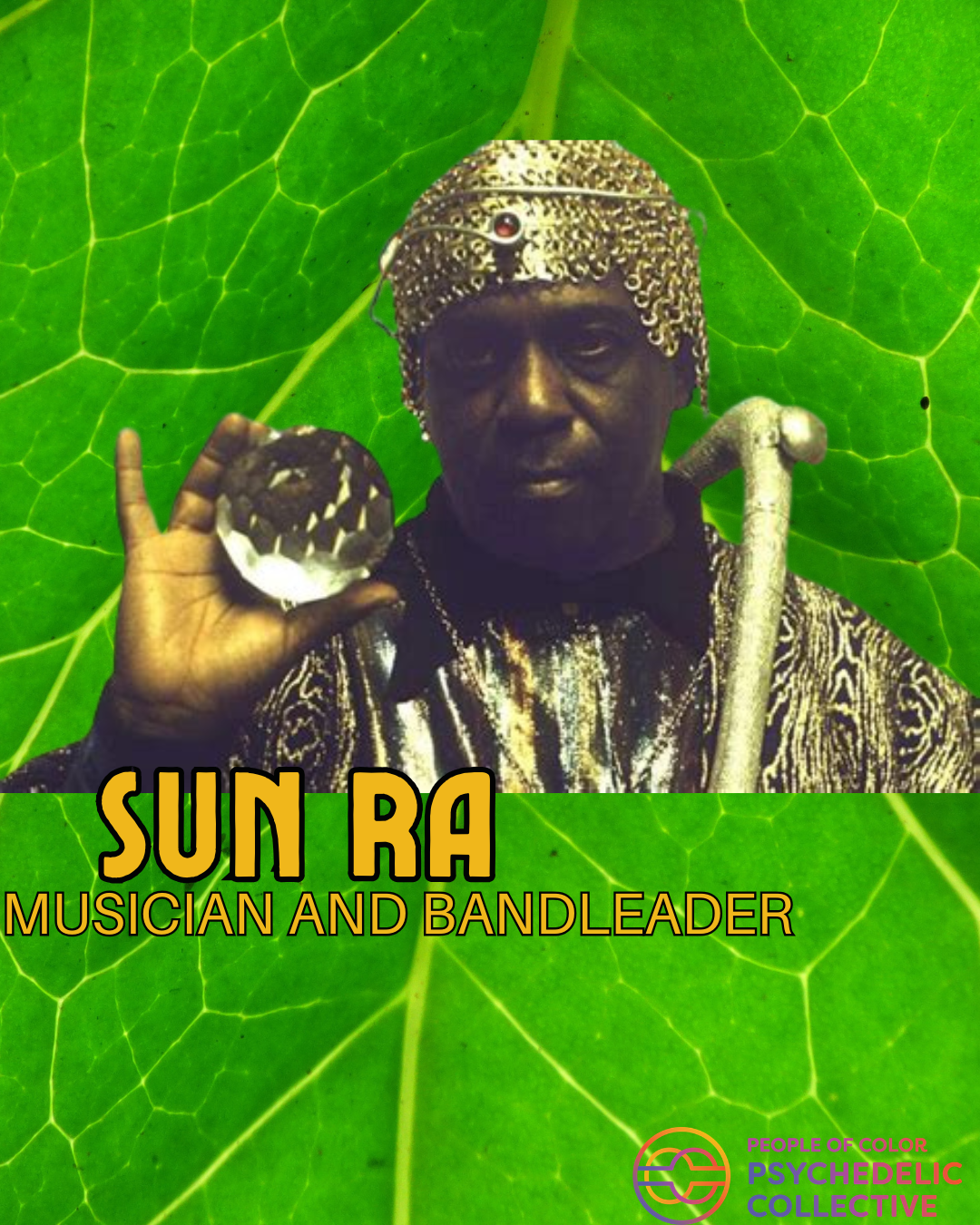
Sun Ra
Sun Ra was a composer, jazz big band leader, piano and synthesizer virtuoso, and a particularly unusual being. Born in 1914 in Birmingham, Alabama, Sun Ra was a musical prodigy who migrated to Chicago in the mid-40s, where he founded his ensemble called the Arkestra. Sun Ra famously forbade his band members from using drugs or alcohol and told his audiences that he alone was all the drug that they would ever need. He promoted his large, disorientingly flamboyant stage shows as a platform for human development and happiness. His emphasis on building a cosmo jazz odyssey of African dance and percussion, free jazz, and performed mythology offered an early form of AfroFuturism long before that term had been invented. Sun Ra was able to fluidly navigate time and space in a way that strongly suggested an altered form of consciousness, and he performed this feat without ingesting psychoactive substances. Sun Ra's legacy is a path of non-violence, freedom, creativity, and healing. He left the planet in 1993.
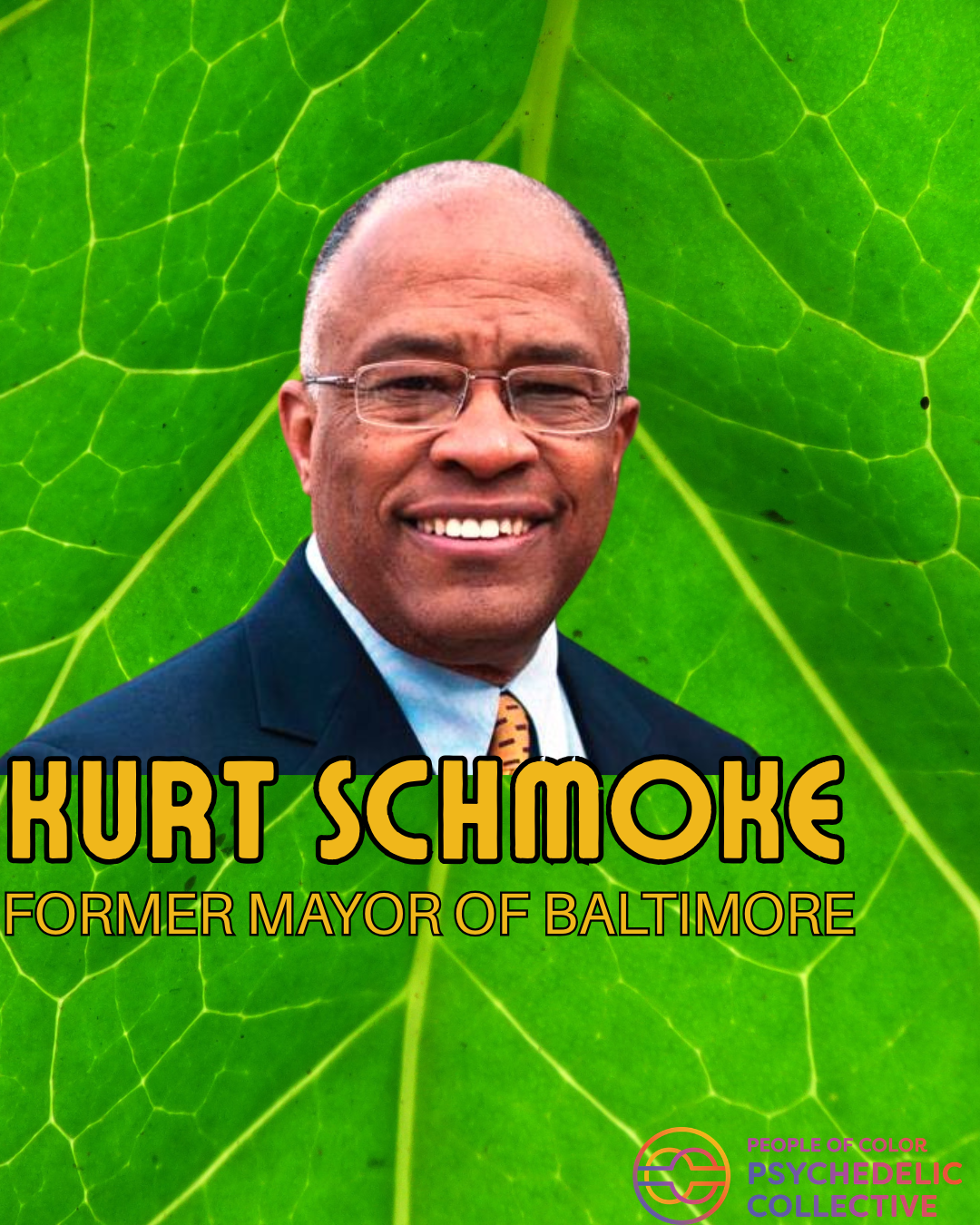
Kurt Schmoke
Kurt Schmoke was born in 1949 in Baltimore, Maryland, where he served as the city’s first Black mayor from 1987 to 1999. Despite it being a very unpopular stance, Mayor Schmoke advocated for an end to the so-called war on drugs, advocating instead for decriminalization under a public health model. At the 1988 U.S. Conference of Mayors, Mayor Schmoke gave a speech explaining how drug criminalization harms communities and is inhumane. Many criticized Schmoke for his progressive ideas, but time has shown that he was far ahead of his time. Today, Schmoke is the president of the University of Baltimore.

Angel Bat Dawid
Angel Bat Dawid is a jazz composer and masterful clarinetist. She also sings and plays piano. She was born in Atlanta in 1979 and spent part of her childhood in Kenya before moving to Chicago, where she immersed herself in a rich African American musical culture. Greatly influenced by Sun Ra, her anti-racist music can paint a cinematic reimagining of Black pasts and Black futures. . Her performances are spiritual, fluid, and interactive. After seeing Bat Dawid at the 2022 PDX Jazz Festival, Collective member Lorena Nascimento said, “It feels like a psychedelic church ceremony.” Similar to Sun Ra, Angel does not provide a direct connection to psychedelic advocacy, but her music and performances strongly evoke experiences beyond normality, that is, cognitive and ontological resistance. Angel is also an educator, teaching music to youth. Her last, Journey to Nabta Playa, a reference to an archaeological site in the Nubian Desert of southern Egypt, references cosmic travel, the processing of grief, and the Black church.
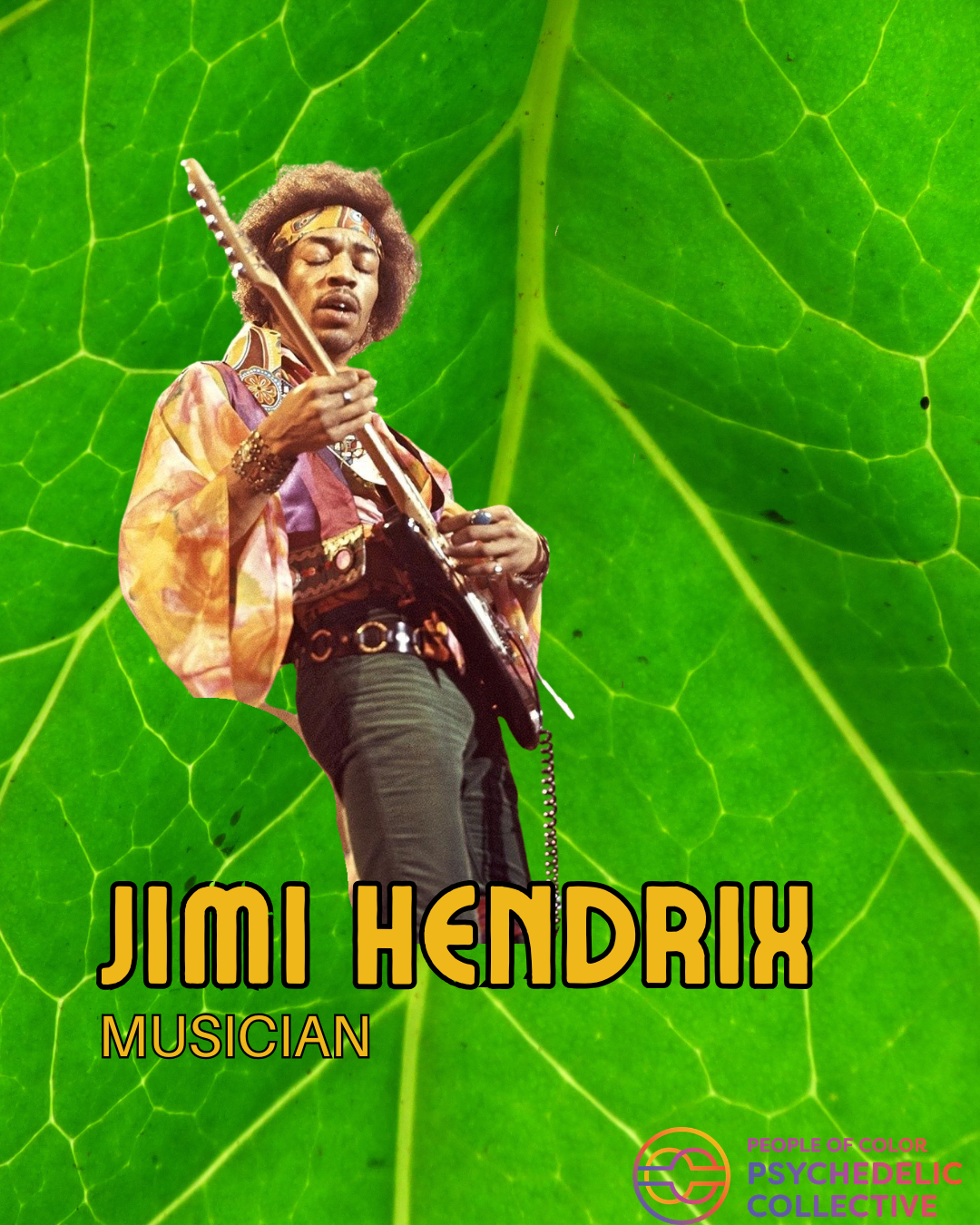
Jimi Hendrix
Jimi Hendrix was born in Seattle, Washington, in 1942. Hendrix made new music by exploring the textural possibilities of electrified blues guitar. He used these new sonic ideas as a platform for songs about love and life that often invoked imagery that seemed pulled from a psychedelic trip. During the early and mid 60s, Jimi learned music as a backing musician for artists like Little Richard, The Isley Brothers, and Wilson Pickett, but when he first came to public attention as a solo artist, it was with two British bandmates and a sound that was unapologetically allied with the global youth movement, its anti-establishment critique and embrace of mind altering drugs. This trio debuted as the Jimi Hendrix Experience with an album titled Are You Experienced, which seemed to invite listeners to join them on a journey through expanded consciousness. Jimi died in 1970 from taking an over-the-counter sleep aid with red wine. He was 27-years-old.
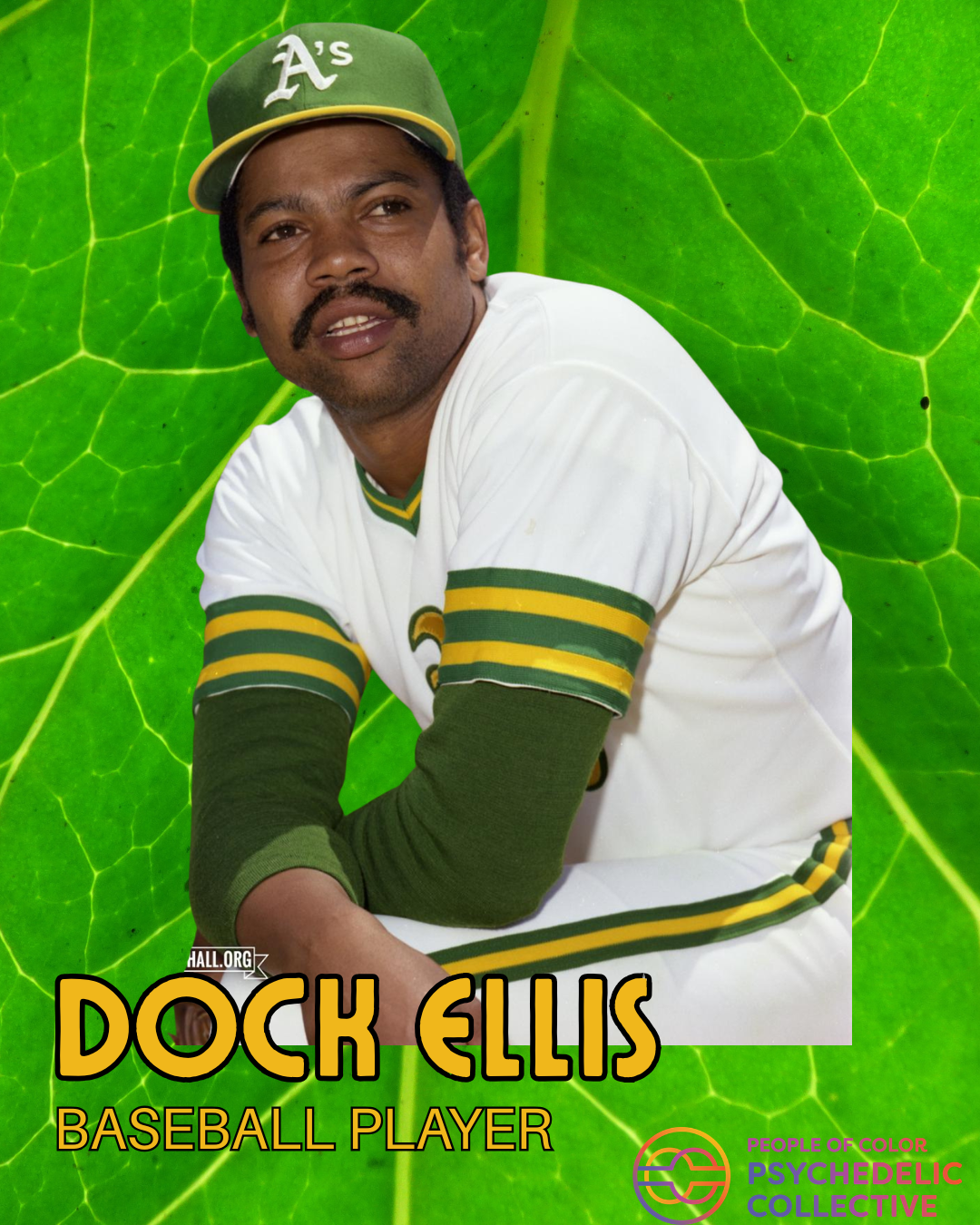
Dock Ellis
Dock Ellis was born in 1945 in Los Angeles. He was a professional baseball player from 1968 through 1979, most notably as a pitcher for the Pittsburgh Pirates. On June 12, 1970, Dock Ellis threw a no-hitter against the San Diego Padres while under the influence of LSD. The story begins with a chaotic misunderstanding. Dock had been taking LSD throughout what he believed was an off-day that morning. At roughly 2:00 PM, he accidentally found out that he was scheduled to pitch in San Diego that same night. Ellis quickly flew to San Diego, arriving around 3:00 PM for the 6:05 PM game. “I started having a crazy idea in the fourth inning that Richard Nixon was the home plate umpire,” he recounted years later to the New York Times. “And once I thought I was pitching a baseball to Jimi Hendrix, who to me was holding a guitar and swinging it over the plate. Ellis was diagnosed with cirrhosis in 2007 and died in Los Angeles on December 19, 2008.
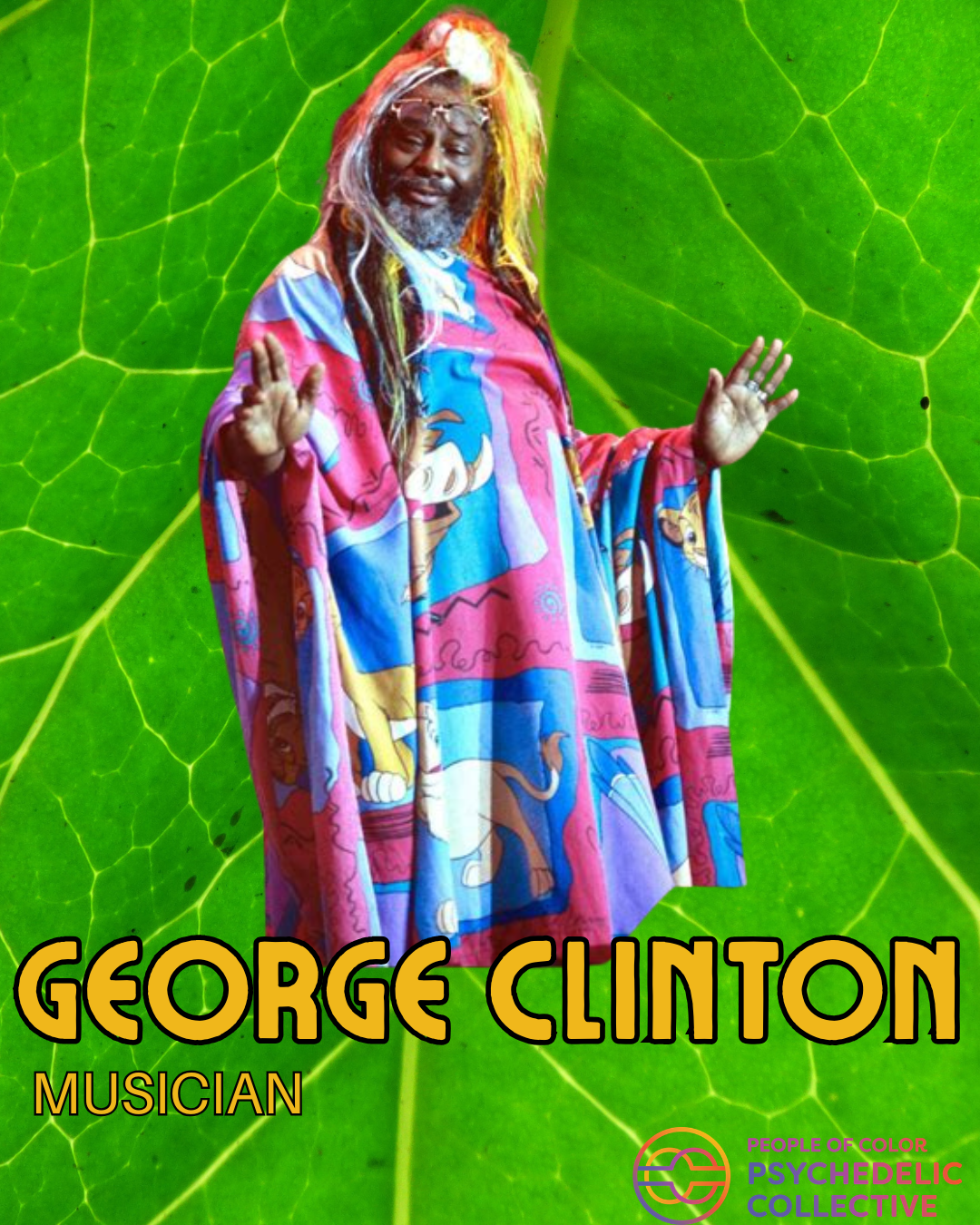
George Clinton
George Clinton was born in 1941 in Kannapolis, North Carolina. Using a barbershop in Plainfield, New Jersey as a rehearsal space, he launched a two-headed black music called Parliament–Funkadelic. Parliament started out as a doo-wop group performing the kinds of harmonized ballads that made hit records in the 50s and early 60s. Funkadelic came later, beginning as something like Parliament's rock-and-roll backing band. If Parliament had Motown’s polished, radio-friendly soul tunes as its model, Funkadelic was an outgrowth of counterculture and the turn-on, tune-in, drop-out ethos that had spawned white hippiedom. “I don’t remember the first time I took acid,” recalls Clinton in an interview. “In Boston, everybody hooked you up. We went around to schools – MIT, Harvard. Boston was definitely the first time. Then Toronto. Detroit. I stayed loony for three years…I never thought acid did anything for me musically, but a long time after I quit, I realized that it did make my tempo unlike most tempos out of Newark.”
These pioneers show that psychedelic experience goes beyond taking substances and can be a lifestyle for peace, freedom, transformation, meditation, and self-preservation. Their footprint, respect, and influence are evidence that blackness and psychedelics can walk together ✊🏼✊🏽✊🏾✊🏿